Innovation in Action: Eight Health Centers Target Financial Sustainability
Innovation
NACHC’s Center for Innovation has launched the 2026 Innovation Incubator program. This year, the cohort focuses on the theme of Financial Diversification & Sustainability. In its third iteration, the Incubator operates on the premise that innovation often fails when “fixers” jump to solutions without understanding the root cause. To shift this dynamic, the program provides seed funding and a “sandbox” to test new ideas without immediate real-world consequences. NACHC’s Incubator training relies on collaborative growth, where health centers convene in person and during virtual meetings to learn and implement innovation concepts through NACHC’s reinvigorated Innovation Incubator Curriculum
The eight selected health centers receive funding, training, and access to subject matter experts over a 9-month period to design sustainable and replicable solutions. The 2026 cohort includes:
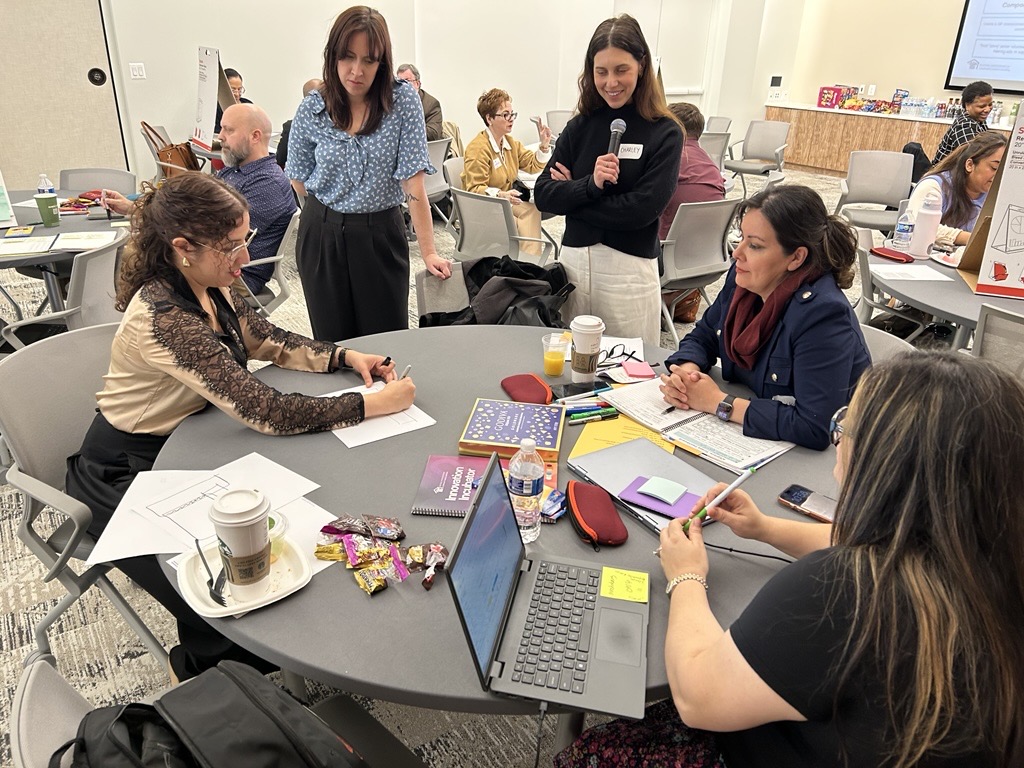
The cohort recently completed an intensive in-person training on March 26 and 27, 2026. On day one, participants engaged in “Brain Blasts” to generate a wide array of ideas and approaches to their specific patient-centered challenges.
“I like how we were pushed in uncomfortable directions. Even if we didn’t go all the way, we landed in an advanced place based on the push and compromise.” – Workshop Participant
“I loved all the touch points with other health centers. It really made the experience very helpful.” – Community Health Service, Inc.
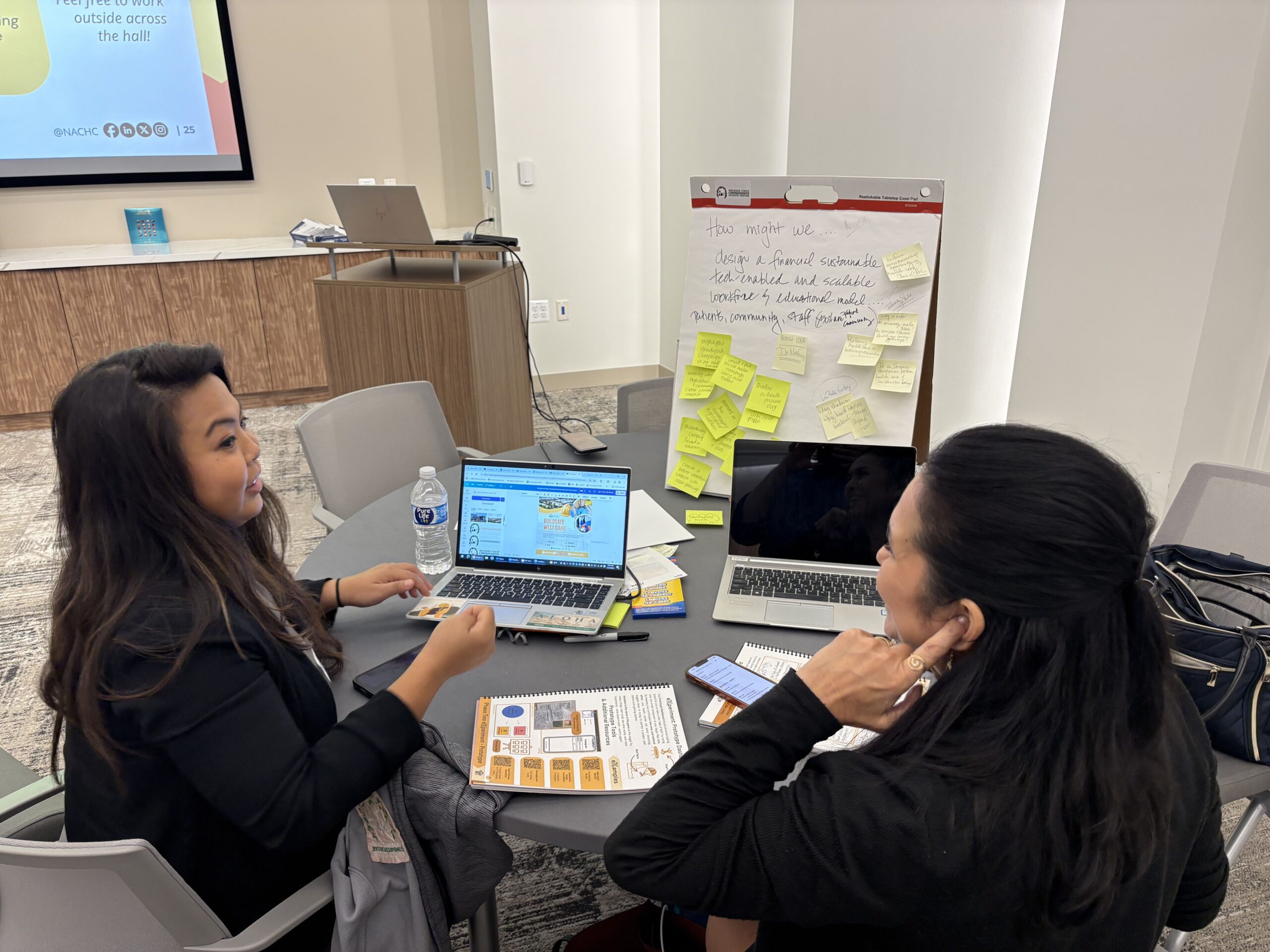
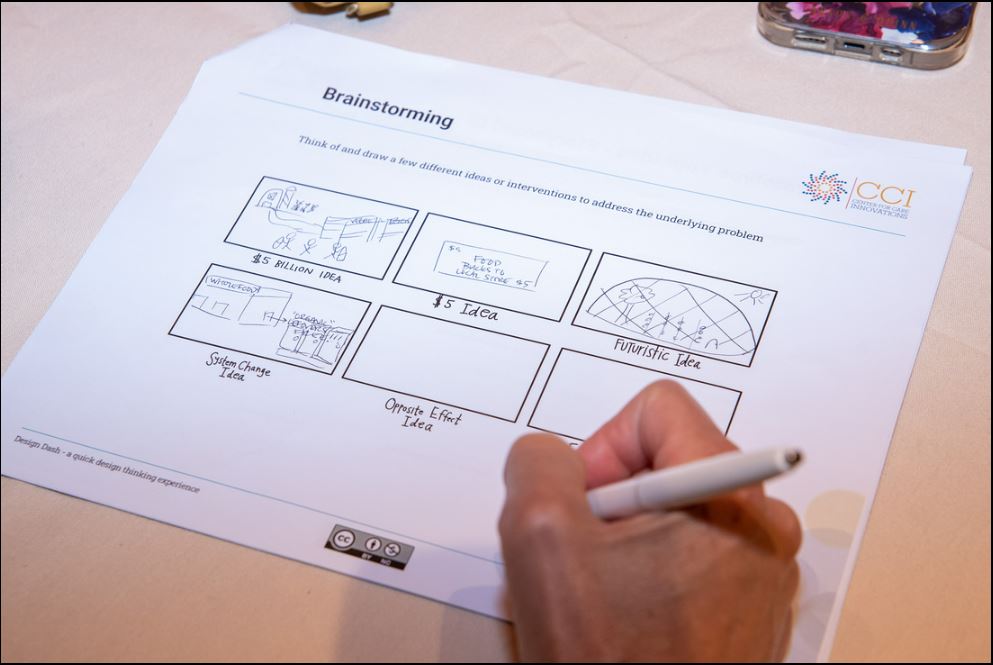
On day two, the training transitioned from theoretical concepts to testable actions. Teams identified risky assumptions and used “scrappy” tools like storyboards and rudimentary drawings to prototype their ideas. In doing so, the health centers were able to devise plans to progress quickly and gather rapid feedback from staff and patients before investing significant resources.
“Being in the room with peers and SMEs allowed us to test, refine, and strengthen ideas in real time. Hearing how other health centers are approaching similar challenges was also helpful and expanded our thinking. A key takeaway for our team was grounding our Big Idea and prototypes in what we heard during staff, patient, and community interviews. The process helped us turn what we heard from our community into something real, testable, and sustainable.” – Waianae Coast Comprehensive Health Center
After the training, the health centers jump into testing multiple components of their idea on staff and patients. This summer, they’ll develop a business plan and prepare for a full pilot to ensure that their patient-centered solution is able to generate revenue for long-term sustainability. The 2026 program will culminate in a live pitch session in the fall, where health centers will show off their hard work to industry experts and stakeholders.
Click the link below if you’d like to stay connected by sharing your contact information with NACHC’s Center for Innovation!
Mobile units at health centers are on the rise! The number of Community Health Center units increased 139% from 2015 to 2021.
Mobile clinics help to:
Bridge gaps in access to quality care
Build trust with disenfranchised communities by bringing care to where they are
Attract, inspire, and retain healthcare talent by offering out of clinic experiences
Create new engagement opportunities and partnerships
Encourage innovation and community engagement
Respond post-disaster to impacted areas and/or where clinics may have had damage to their buildings
Building Capacity at the State Level for Health Center Mobile Units
Congress has recognized the unique value of mobile clinics by passing the MOBILE Health Care Act which will allow grant-funded health centers to propose New Access Point (NAP) projects solely for one or more new mobile health units. This change to NAPs will take effect January 1, 2024.
For state and regional Primary Care Associations (PCAs), NACHC is fortunate to have support from the Leon Lowenstein Foundation this year in the form of grants to help PCAs build capacity for the growth and development of mobile units at health centers.
At the Local Level, Health Centers Use Mobile Units to Increase Access to Care and Advance Health Equity
Here are some examples from a grant project completed in 2022 by NACHC, with support from the Leon Lowenstein Foundation, that show how some health centers increase access to care for people across the country. Each health center featured in the video was selected based on efforts and lessons learned during their COVID-19 response with mobile units. They exemplify the approaches health centers take that are advancing work toward health equity.
Read these brief innovation spotlights on each of the community health centers featured in the video:
Starting or expanding a mobile fleet comes with many benefits, including the ones named in the Mobile Health Map and Mobile Healthcare Association’s Business Case for Mobile Health resource.
If your health center has a mobile unit and you have questions, comments, or initiatives to highlight, comment below or email us at innovation@nachc.org.
This post is part of NACHC’s monthly Innovation Blog Series hosted by our Center for Community Health Innovation.
We asked staff around NACHC what they read, watched, or listened to this year that they found helpful in expanding their thinking or introduced new ideas. See the list below. There are many more resources out there, share what you found insightful on your innovation journey this year in the comments.
Ted Henson, Director of Health Center Growth and Development
“Impact of Random Acts of Kindness” (article in the New York Times) – the article shows how small actions every day can have a big impact. Elizabeth shares, “especially given how the pandemic physically distanced us from one another, small acts of kindness have become paramount to re-establishing the human connections that were lost and have changed because of the pandemic.” She continues, “I have come to really value small acts of kindness.”
Elizabeth Linderbaum, Deputy Director of Regulatory Affairs
“Reckoning with Racism in Nursing” (video interviews) – a collection of conversations about the experiences of racism in the nursing profession highlighting the issues and challenges facing nurses of color and proposed solutions.
Dr. Wanda Montalvo, Senior Fellow, Public Health Integration and Innovation
“Daily Devotional” (book) – “The one thing I have remained consistent about is to read my daily Bible verse,” said Sanetra. She finds inspiration, grounding, and self-care with the readings.
Sanetra Mitchell Smith, Deputy Director of Contracts and Procurement
“Creative Acts for Curious People” by Sarah Stein Greenberg (book)– provides an array of activities, both individual and group based, to help think outside the box. Camila says, “This has become my go to book whenever I need to lead innovative thinking, workshops, meetings… I think this is a must in the toolbox of any aspiring innovator.”
Camila Silva, Deputy Director of Innovation
“On Earth We’re Briefly Gorgeous” by Ocean Vuong (book) – Cassie found the story to be incredibly moving. Though not directly related to health care, she says, “the themes throughout of racism, LGBTQIA experiences, and addiction speak to the realities of so many of the marginalized patients and communities that health centers serve… To learn about and have compassion for other people and their experiences grounds us all in the health center movement.”
Cassie Lindholm, Deputy Director of Quality Center
We hope these offerings inspire your thinking in 2023!
While Community Health Centers are valued as the nation’s largest primary care network, little is known about the ways they are often a major source of innovation in healthcare and support services. At NACHC, we lift up their innovations through initiatives like the Center for Community Health Innovation and our new Clinical Innovation Showcase.
For our first Showcase event this fall, 28 health centers, Primary Care Associations (PCAs), and Health Center Controlled Networks (HCCNs) submitted applications. We sponsored this Clinical Innovation Showcase with Community Health Ventures as a platform for clinical care teams to share unique and impactful initiatives designed to reach Quintuple Aim goals: improved health outcomes, improved staff and provider experiences, lower costs, and health equity.
With so many impressive programs to choose from, we are pleased to highlight our top three winners: AllianceChicago, AltaMed, and Oak Orchard Health. Each received complimentary travel and conference fees to the Financial, Operations Management/Information Technology (FOM/IT) conference in October 2022 and were acknowledged with an award during the Clinical Innovation Showcase ceremony. As a first-place award, AllianceChicago received $10,000 to support their award-winning clinical innovation.
View all the competition submissions targeting improvements in data, technology, informatics, care teams and the workforce, health equity, partnerships, virtual and curbside care. Keep an eye out for next year’s application opportunity.
We also want to thank Baxter Health, BlueStar Telehealth, and McKesson Medical for their sponsorship.
1st Place Innovation: AllianceChicago, Chicago, IL
AllianceChicago partnered with Tapestry 360 Health and QliqSOFT to pilot a project that used chatbot technology to optimize and deliver messages to families about the importance of well child visits and up-to-date vaccinations to increase the completion rate of these services. Using QliqSOFT’s customizable AI chatbot platform, “Quincy”, texts and emails in either English or Spanish launched a chatbot dialogue with nearly 250 parents through Tapestry 360 Health. Parents were reminded of well child visits and immunizations that were due, were engaged with evidenced-based child health educational resources prior to appointments, could ask questions, and could schedule appointments online or by phone.
As with many preventative screenings the COVID-19 pandemic led to a decrease in CRC screenings. This was already a challenge for many AltaMed’s Latino/a patients due to a lack of transportation and rigid shift work schedules. In response, AltaMed designed an innovative end-to-end workflow and CRC screening outreach strategy that enabled the health center to directly communicate with patients to encourage colorectal cancer screenings. The health centered distributed 7500 free home colorectal screening tests and supported the distribution with a multi-channel texting and video campaign that included educational animated fotonovelas, and high-touch patient navigation strategies to increase rates of CRC screenings and abnormal test follow up among Latino/a patients, age 46-69.
3rd Place Innovation: Oak Orchard Health, Brockport, NY
Oak Orchard Health’s behavioral health team created its Mommy and Me Healthy We Will Be program to support new moms and babies as a team. Their aim was to help achieve optimal maternal and child health and normalize conversations around postpartum depression and anxiety. This program integrates behavioral health care managers into the pediatric care team. Each care manager attends well child visits starting with the first visit after delivery through age five. During child well visits, care managers screen moms for depression, anxiety, substance use, and social determinants of health barriers. They also conduct developmental screenings using the Ages and Stages screening tool, and track adherence to immunization schedules and well child visits. Assessments inform needs for other health center services, or services from external partners. Parents can also access a diaper bank and early childhood literacy resources. Mommy and Me Healthy We Will Be is designed to be sustainable and replicable by incorporating several revenue streams, including billable evidenced-based assessments and increased referrals to other in-service lines.
Are innovation efforts at your Community Health Center intentional or are they simply an item on your to-do list?
Monday to-do list:
☐ Help patients have a better waiting room experience
☐ Find extended hours coverage at front desk
☐ Decrease patient wait times
☐ Troubleshoot EHR for specific code
☐ Find an innovative project (?)
If this is what your to-do list looks like, innovation is not likely one of your top priorities. Yet, often we are asked to be more creative or suggest innovative projects. How are we supposed to do that when there are other more pressing priorities needing our time and attention?
When this happens, innovation becomes an afterthought. Innovation for the sake of innovation often leads nowhere. Instead, try changing the way you approach innovation; innovation can be employed as a strategy to solve the other items on your to-do list.
That is exactly what NACHC’s Center for Community Health Innovation sought to address during the FOM/IT’s Innovation Workshop in October. We discussed the Four Types of Innovation as proposed by the Harvard Business Review and then rolled up our sleeves to work together on some easy-to-use activities that any organization can adapt to help them solve all kinds of issues.
While there are many tools for innovation, we selected the following based on their ease of use and their applicability to the health center ecosystem.
Immersion
When someone reports an issue, there is a possibility that that issue is simply a symptom of the actual problem. The immersion technique will allow your team to immerse itself into the life of the people impacted by the problem. Low staffing at the front desk impacts not only the staff but also the patients, and it is vital to understand the issue at hand from all perspectives.
Immersion will allow you to gather insights so that later you can better define the problem you are trying to solve.
Build a Team
“If you want to go fast, go alone; If you want to go far, go together.”
Building the right team will allow you to bring different perspectives, which in the end can save both time and money.
Don’t forget, a team can also benefit from external input.
How Might We …?
Transform our insights gathered from the Immersion into “how might we” statements. This allows the team to better define the problem at hand, while also allowing for multiple solutions.
Sailboat
In business school they review the SWOT (Strengths, Weaknesses, Opportunities, Strengths) analysis ad nauseum. The Sailboat is a different way to get similar insights, while in my opinion, allowing for more open and frank conversation.
Brainstorm
This is the time to let multiple ideas flourish. Normally, we all have a tendency to self-filter and by having a structure in place for wild ideas we create a safe space to fail and to try new things.
After walking through these activities, your team will be able to prototype and test the ideas. This is an essential part of the process. By creating low-fidelity prototypes, you are able to gather user perspectives (both patient and staff), make edits, and test again.
Many health center staff likely know quality improvement (QI) tools and processes, such as Plan-Do-Study-Act (PDSA) cycles, asking the 5 whys, root cause analysis, and others. They help streamline and standardize workflows. Through regular monitoring and feedback on process and outcome measures, one can ensure the workflows achieve the intended results.
At our tables with small groups of 4 to 5 people, the facilitators walked us through a design dash. The design dash included some interesting tools. The tools aimed to have us listen more closely and shift most of the brainstorming time to understanding the problem. Typically, most of the time is spent on coming up with solutions, but that may misunderstand or misrepresent the end user’s pain point(s).
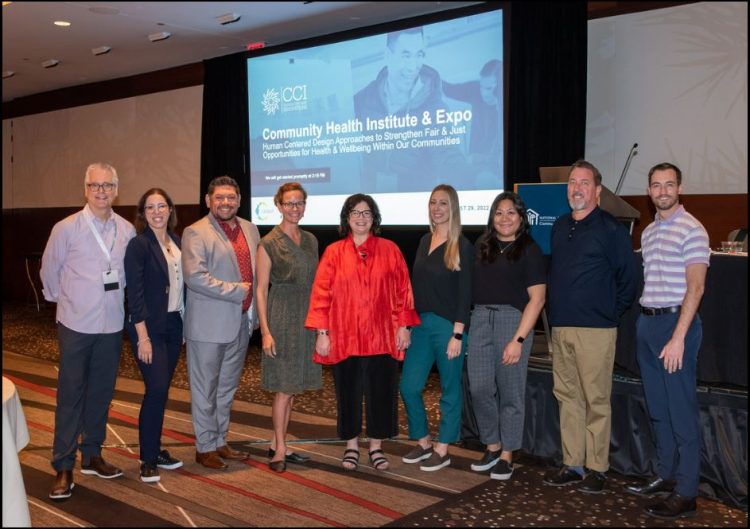
Staff from Center for Care Innovations with NACHC staff at CHI in August 2022. (From left to right) Chris Conley, Camila Silva, Rigo Garcia, Sofi Bergkvist, Merrill Press, Kathleen Figoni, Nikki Navarrete, Jed Heibel, and Jed Barton.
A key point of human-centered design is to take into consideration the users’ perspectives before jumping into solutions mode. A few tools that can help your health center implement a human-centered approach are listed below:
I like, I wish, and I wonder
Whenever someone gave an idea, the others in the group provided feedback by finishing each of these phrases.
Often when presented with a problem, we immediately start looking for solutions. Intentional and active listening to better understand the problem that was most pressing to the user, without our own bias interfering.
While we were not able to apply this method at the workshop due to time constraints, the immersion method is for deep understanding of people’s lives. By “walking a mile in their shoes”, this allows us to have a more in-depth knowledge of what is important to the user instead of focusing on a single portion of their lives. This method allows us to find areas of synergy to create solutions that fit into the users’ lives instead of adding a burden.
Example from the field: Human-centered design and mobile units
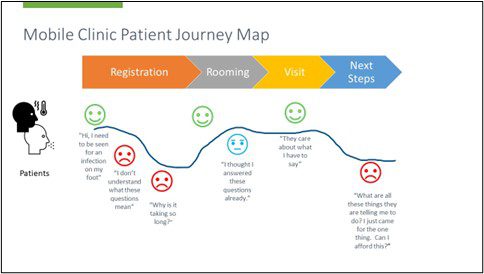
A recent NACHC project, completed by the Clinical Affairs team and funded by the CDC, utilized human-centered design methods to engage key stakeholders and patients to redesign a mobile clinic using telehealth for infectious diseases among rural communities.
See the patient journey map below for some of the key themes identified during interviews with staff, county representatives, community partners, and patients. Of note, the assumption that the registration process should be the same on the mobile health unit as in the clinic was shown to be false. By changing the check-in process, fewer patients left after registration and average registration time decreased from 20 minutes to 5 minutes.
Source: Montalvo, Winford, & Hangsleben, [conference presentation], “human-centered design: engaging key stakeholders and patients to redesign a mobile clinic using telehealth for infectious diseases among rural communities.” (August 28, 2022).
When we bring patients and communities together with care teams to include human-centered design into developing new ideas, whether an innovative solution or QI efforts, even more amazing results are possible. Has your health center utilized a different technique to improve provider and/or user experience? Let us know at innovation@nachc.org for a chance to be featured in our innovation blog series.