
NACHC’s podcast, Health Centers on the Front Lines, covers pressing public health issues and shares stories about how Community Health Centers deliver affordable, innovative care at the same time they are advancing health equity in their communities. These are the 5 episodes listened to the most in 2022:
NACHC Blog
2. Work As a Social Driver of Health: How La Casa Family Health Center Identifies Farmworkers
3. A Path to Healing for Health Care Workers
5. Battling the COVID Pandemic and Systemic Racism in North Carolina
Subscribe to Health Centers on the Front Lines.
We’re wrapping up 2022 by looking back at some of our most popular activities and resources. Covering a range of topics, including value transformation, the health center workforce, and family planning, here are the 10 resources most-downloaded from NACHC.org this year. Also, remember, when you’re looking for excellent resources, to also visit the Health Center Information Clearinghouse. See top Clearinghouse resources below:
- What Are Community Health Centers? A brochure describing the unique attributes and benefits of health centers. View resource
- Community Health Center Chartbook 2022: Highlights important research and data on Health Center Program Grantees, as well as other Federally Qualified Health Centers (FQHCs). View resource
- What Is the Value Transformation Framework? A quick overview of the model that helps health centers apply system-wide change and advance value. View resource
- Snapshot of America’s Health Centers 2022: This annual infographic presents data about who health centers serve, the positive health impacts they have on patients, and their economic contributions to their communities. View resource
- Current State of the Health Center Workforce: Published in April, this report outlines the results of that survey and explores approaches that would help to diversify and strengthen the health center workforce of the future. View resource
- 340B: A Critical Program for Health Centers: This report shares findings from a survey of health centers about how the 340B program is critical for health centers to provide access to affordable life-saving medications and primary care services to the most vulnerable patients. View resource
- COVID-19 Vaccine Communications Toolkit: Key messages, sample social media posts, and graphics for health centers to use to promote COVID vaccination. View resource
- Care Teams Action Guide: Value Transformation Framework Action Guide for Care Teams View resource
- Family Planning TA Resources: A non-exhaustive list of educational or technical assistance material that may be helpful in increasing knowledge about the provision of family planning services. View resources
- Patient Action Guide: Value Transformation Framework Action Guide for Patients. View resource
Most-Downloaded Health Center Clearinghouse Resources
NACHC is one of more than 20 organizations that contributes to the Clearinghouse. We published 8 of this year’s most popular resources on the Clearinghouse covering health center governance, social determinants of health, and finance:
- Governance Guide for Health Center Boards (English/Spanish) – This resource provides an overview of health center board roles and good governance practices.
- Health Center Board Roles/Funciones de las juntas de los centros de salud – This 10-minute video provides an overview of health center board roles.
- Four Fundamentals of Value-Based Payment for Health Center Boards – This short video outlines fundamental things boards should know about value-based payment.
- New Board Member Orientation: PowerPoint Template & Facilitator Guide – This template can be downloaded and adapted for a health center board’s own orientation needs.
- Sliding Fee Discount Program: The Fundamentals for Health Center Boards – This video provides an overview of the Sliding Fee Discount Program required under the Health Center Program.
- Social Determinants of Health— Medicaid Coverage and Payment – This publication demonstrates opportunities to use SDOH screening tools such as PRAPARE to improve the delivery of care through enhanced data collection and relationships with safety-net programs.
- Finance Office Hours Facilitated Discussion: On the No Surprise Billing Act – This webinar provides insights into the No Surprise Billing Act that will go into effect in January 2023.
- Legal Lessons Learned from the Pandemic for Health Center Boards – This short article highlights legal lessons learned for boards coming out of the pandemic.
Every year the George Washington University Geiger Gibson Program in Community Health recognizes leaders in the Community Health Movement who are quietly making a difference. One such leader, Felix Hernandez, a 2022 Geiger Gibson Emerging Leader, started as a middle school and pre-K teacher. That was just the beginning of his lifelong quest to lead with change in the community health space.
Hernandez works in a ground-breaking program at Mary’s Center in Washington, DC, as the Advocacy and Father Child Attachment Program Manager. The health center receives a grant from the Child and Family Services Agency (CFSA), which aims to reduce child abuse and neglect in the District by building and strengthening family relationships through home visiting programs. As a teacher, Hernandez recognized how a child’s home life might affect their ability to learn in the classroom. When he became part of the home visiting program, Hernandez put his own personal experience and educational skills to work.
Why focus on fathers?
Hernandez explains that “more men need to feel comfortable talking to other men about patriarchy and masculinity.” Growing up with machismo culture, Felix relays some of the impacts and how he has done internal work to address the effects. He says, “I knew I did not want to contribute to that culture.”
The father-child attachment program’s approach
Parental knowledge of developmental stages is a protective factor and builds resiliency in children. The father child attachment program supports participants with a two-pronged approach toward that end. One prong includes tangible resources such as diapers, housing vouchers (when accessible and possible), insurance enrollment, and general stability like employment.
Once a trusting relationship and rapport is in place, the family support workers broach the second prong. They engage participants in conversations around patriarchy, toxic masculinity, nonverbal communication, father-child attachment, and more. Hernandez emphasizes how it is an opportunity to be self-reflective together. “There is not one right way to parent,” he says, adding that what is more important is “reinforcing parenting strengths.”
“We have seen firsthand how fathers become more involved in parenting when their immediate needs for their families are met. Felix and his team have done an excellent job building a network of support, trust, and strength for them to become the fathers they want to be for their children.”
Joan Yengo, Vice President of Programs, Mary’s Center

The program in action – one father’s experience
One participant’s story demonstrates how the two-pronged approach works. A husband lost his wife while she was pregnant. She primarily handled medical appointments and school for their children. She was also the primary partner in the application for U.S. citizenship. In one fell swoop, this father lost a life partner, a partner in all family matters, and the route for documentation. The family support workers at Mary’s Center were there to help the father coordinate his children’s lives with a representative who spoke his language. The team meets with fathers as much or as little as needed. The goal is to touch base at least once a month.
The future of the father child attachment program
Hernandez has several goals for the program moving forward. He hopes to grow the team and double the number of family support workers. Hernandez also wants to help establish workforce pathways for fathers to reduce the need for working multiple jobs which can impact their ability to bond and build relationships with their children. The small but mighty fatherhood team at Mary’s Center believe in their approach to accomplish long-term behavior change, but there are daunting challenges: compensation constraints, an administrative burden of documenting and caseload issues and battling certain cultural narratives and social drivers (particularly employment).
Emerging leaders’ nominations now open
Hernandez’s work reminds us that every day there are people like him in the health center world creating a ripple effect of positive change and wellness. NACHC is proud to partner with the Geiger Gibson program and recognize their work as part of the Emerging Leaders program. If you know of a health center leader like Felix Hernandez, nominate them. You can read here for more information and to nominate someone. Deadline for nominations is December 20, 2022.
We’re wrapping up 2022 by looking back at some of our most popular activities and resources. View the 10 most-read blogs below!
Health Centers are Rooted in the Civil Rights Movement
Lathran Johnson Woodard, Chief Executive Officer of the South Carolina Primary Health Care Association and Immediate Past Board Chair of NACHC, discussed how Community Health Centers sprang from the activism and values that animated the Civil Rights Movement.
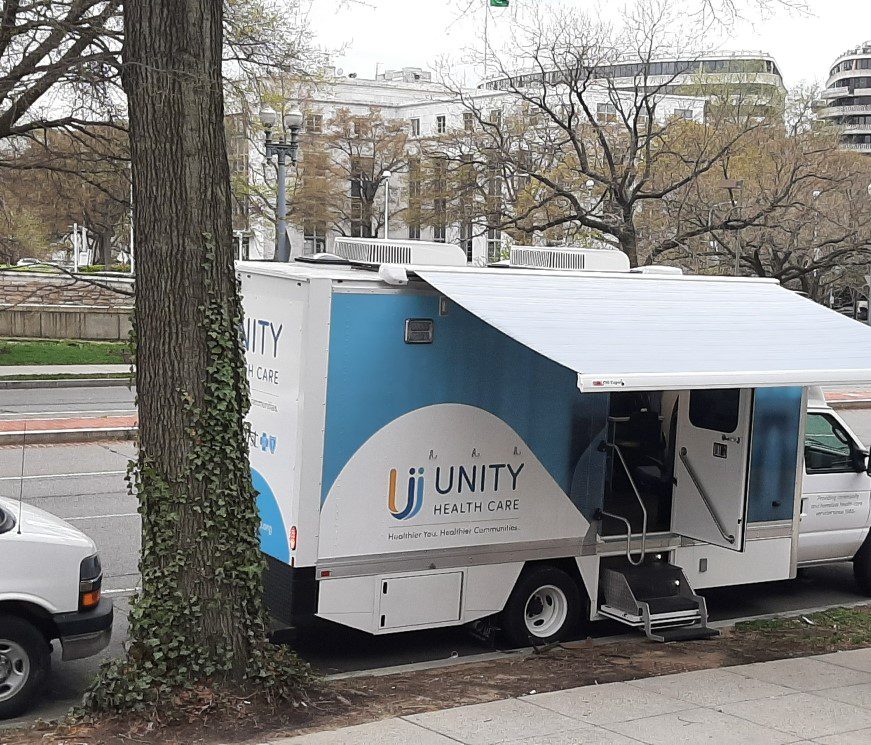
Mobile Units: Helping to (Re)Build Trust for People Experiencing Homelessness
Mobile units, such as Unity Health Care in Washington, D.C., are adding to the existing network of care and outreach to the those experiencing homeless.
Why Protecting 340B Matters
Ari Wagner, PharmD, of PrimaryOne Health in Ohio, explained how pharmaceutical companies’ discriminatory actions against health centers and their contract pharmacies threaten the 340B program.

A Health Center that Prescribes Food as Medicine
Community Health Centers have long understood that food insecurity is a social driver of health, and many are finding innovative ways to address it beyond the walls of the exam room.
Children’s Mental Health is a National Emergency
Marisa A. Parrella, LICSW, LCSW-C, MSW, Director of School-Based Mental Health at Mary’s Center, writes that the DC school-based mental health program provides a model for how other states and districts can partner with health centers to provide behavioral health services in schools.
Health Centers and the Water Crisis in Jackson, Mississippi
Terrence M. Shirley, MPH, is the CEO of the Community Health Center Association of Mississippi, wrote about how Community Health Centers were mobilizing to meet residents’ most basic needs.
Defending the 340B Program from Every Direction
An overview of how NACHC has been working to protect the 340B program which is critical for health centers, by NACHC’s Deputy Director of Regulatory Affairs, Elizabeth Linderbaum.
NYU Langone’s Family Health Centers Steer Efforts Toward Improving the Community Health Workforce
The Family Health Center’s new Psychiatry Residency — one of only four programs of its kind in the country – is helping train providers to meet the surge in demand for mental health care. Read blog.
Using Counter-Narratives as a Strategy for Promoting COVID-19 Vaccination
Insights from focus group research into how health center care teams can help people contemplating getting the COVID-19 vaccine. Read blog.
Health Center Nurse Appreciation: Nurses Week 2022
Profiles of just a handful of the thousands of Community Health Center nurses who go above and beyond to care for patients. Read blog.
The White House recently unveiled a COVID-19 Winter Preparedness Plan to make vaccinations, testing and treatment even more widely available as cases surge. One feature of their plan jumpstarts a partnership with the U.S. Postal Service to mail free at-home COVID tests to households. The plan also calls for “additional resources to Community Health Centers and aging and disability networks to support COVID-19 vaccination efforts.”
Activities include building vaccine trust and vaccine adherence
The Biden Administration is concerned about a notable rise in COVID, flu and respiratory infections as winter sets in. The announcement comes on the heels of $350 million in one-time funding to health centers to boost COVID-19 vaccinations in their communities, with a specific focus on underserved populations. Health centers can use the funds to expand:
- outreach and education
- community engagement
- coordinated events to increase COVID-19 vaccinations through mobile, drive-up, walk-up, or community-based vaccination events, including working with community and faith-based organizations
The funding will support vaccine administration of the updated COVID-19 vaccine, the COVID-19 primary series and/or other (e.g., influenza) vaccines. The expanded COVID funding allows health centers to continue efforts to form new or strengthen current on-the-ground partnerships with other entities to build vaccine trust and vaccine adherence. It is this particular aspect of health centers’ work that strengthens the public health infrastructure — filling health gaps, meeting people where they are and bringing preventive services to them.
View NACHC’s one-pager on this new COVID-19 funding
Deadline for health centers to submit information
Health centers have until Sunday, January 8, 2023, to submit information about planned activities and costs that the funding will support. There’s a technical assistance webpage for award submission guidance.
Health centers have played a pivotal role in fighting COVID-19 since the beginning of the pandemic. They have provided services to the nation’s most at-risk, medically underserved communities, administering more than 22 million vaccines, of which 70 percent have gone to patients who are racial and ethnic minorities.
Kristine Cecile Alarcon is the Communications and Storytelling Manager, Gabrielle Peñaranda is the Program Manager, Training and Technical Assistance, and Rosy Chang Weir is the Director of Research at the Association of Asian Pacific Community Health Organizations.
Community Health Centers that serve Asian Americans (AAs), Native Hawaiians, and Pacific Islanders (NH/PIs) provide innovative care for their patients. In an analysis the Association of Asian Pacific Community Health Organizations (AAPCHO) conducted earlier this year of federal data, we found that health centers serving AA and NH/PI communities have a higher proportion of patients with social risk factors than health centers across the nation.
Health centers serving AA and NH/PI communities have a higher proportion of limited English proficient, low-income, and Medicaid and publicly insured patients. AA and NH/PI health centers also provide a higher number of enabling services, which are non-clinical services that alleviate barriers to care of patients, or other non-clinical services that aim to increase access to health care and improve health outcomes. Enabling services allow for culturally and linguistically appropriate whole-person care, which can address the unique health disparities that AA, NH/PI, and other communities served at health centers face.
Asian Americans (AAs), Native Hawaiians, and Pacific Islanders (NH/PIs) are the fastest growing racial group in the United States
Asian Americans (AAs), Native Hawaiians, and Pacific Islanders (NH/PIs) have a wide variety of cultures, experiences, rich histories, and languages. People from the AA community have cultural roots from more than 20 countries in East and Southeast Asian and the Indian subcontinent. The NH/PI community are just as diverse with people having origins throughout the Pacific region, also referred to as Oceania, a geographically widespread region populated by people of diverse cultures and ethnicities across 14 countries and a sea of islands grouped into four geopolitical sub-regions. The sub-regions include Australia and New Zealand; Melanesia; Micronesia; and Polynesia. Despite this diversity, AA and NH/PI populations are often aggregated into one racial category, masking meaningful differences in health and social barriers to care between these subgroups.
AAs and NH/PIs are also the fastest growing racial group in the United States, Hawai’i, U.S. Territories, and Compact of Free Association Migrants (COFA) nations. Most AA and NH/PI populations can be found living in California, New York, Washington, Hawai’i, and Massachusetts. Between 2019 and 2020, AA and NH/PI populations had the largest growth (by raw numbers) in Florida, Kentucky, Virginia, Federated States of Micronesia, and Rhode Island. The states with the largest growth rate (by percentage) between 2019 and 2020 were Rhode Island, Florida, Arkansas, Federated States of Micronesia, and Alaska.

AAPCHO analysis finds health centers provide innovative care to AA and NH/PI patients
According to AAPCHO’s analysis of the 2020 Uniform Data System (UDS), AA and NH/PI-serving health centers provide innovative care for their patients. Key findings show that
- AA and NH/PI-serving health centers have a higher proportion of limited English proficient, low-income, and Medicaid and publicly insured patients; and
- AA and NH/PI health centers also provide a higher number of enabling services, which are non-clinical services that alleviate barriers to care of patients, or other non-clinical services that aim to increase access to health care and improve health outcomes.
The innovative care AA and NH/PI-serving health centers provide, like enabling services, can incorporate culturally and linguistically appropriate whole-person care. With whole-person care, providers can address the unique health disparities that AA, NH/PI, and other communities served at health centers face.
Whole-person care can help narrow health disparities in AA and NH/PI patients
Providing whole-person care is essential in addressing chronic and infectious conditions. Nationally, 36% of adult health center patients live with diabetes, and 21% live with hypertension. According to AAPCHO’s UDS data analysis, 25% of AA, 40% of NH, and 43% of PI patients are living with diabetes while 41% of AA, 45% of NH, and 46% of PI patients are living with hypertension. NH/PI patients have the highest rates of chronic disease, which can be largely attributed to socioeconomic disparities, structural discrimination, and pre-existing conditions.
For tuberculosis rates, NH/PI communities have the highest incidence rate (18.7 cases per 100,000 persons), while AA communities have the second highest rates (13.3 cases per 100,000 persons) across the nation. According to UDS data, the average tuberculosis rate was 3.0 cases per 100,000 persons at health centers across the nation. AA and NHPI-serving health centers also serve higher rates of hepatitis B patients compared to the national average with 3.4 cases per 100,00 persons for AAs and NH/PIs, 2.1 cases per 100,00 for NH/PIs. The average hepatitis B rate at health centers across the nation was 1.7 cases per 100,000 persons. These disparities demonstrate the unique health experiences that AAs and NH/PIs face and the need to provide whole-person care to provide unique and tailored care for AA and NH/PI patients.
AAPCHO recommendations for improving care at health centers
Given the unique experiences of the widely diverse AA and NH/PI population, AAPCHO recommends:
- Community-serving organizations, including health centers, adopt screening tools that assess social risk factors and disaggregated race and ethnicity data;
- Health centers tailor health and social services that reflect the needs for AA and NH/PI patients; and
- Community-serving organizations cultivate and sustain community and national partnerships that promote cross-sector partnerships and state and national networks, resources, and expertise.
This blog post is a summary of AAPCHO’s full report. For more information, listen to AAPCHO’s webinar. Stay connected with AAPCHO’s newsletter, Facebook, LinkedIn, Instagram, and Twitter as an analysis of the 2021 UDS data will be released in summer 2023. To learn more about AA and NH/PI-serving health centers, visit www.aapcho.org.
AAPCHO is a national association of community health organizations dedicated to promoting advocacy, collaboration and leadership that improves the health status and access of Asian Americans, Native Hawaiians, and Pacific Islanders in the United States, the U.S. territories, and Freely Associated States.